Showing posts with label Customers. Show all posts

Infy scouting for BPO firm in Canada

Tuesday, September 29, 2009
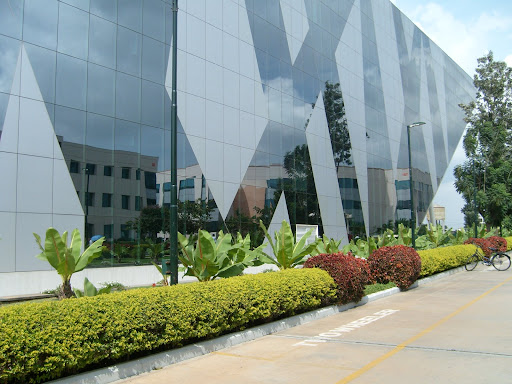
Infosys BPO Building
Infosys BPO Ltd, the business process outsourcing operation of Infosys Technologies, is looking at raising its headcount in the Americas through inorganic growth. The company is understood to be scouting for a strategic acquisition in the $40-60 million range either in Canada or the US, according to industry sources.
"Infosys is looking at acquiring a small or mid-sized company, specialised in providing mortgage or insurance BPO services to grow faster in Canada.
This will help speed up verticalisation efforts currently on at Infosys BPO. The mortgage sector in Canada has seen a number of promising start-ups, as well as established mid-sized companies coming up over the years.

Infosys BPO is looking at further growth in the key mortgage and insurance verticals in Canada, where a strategic acquisition will boost the scope for higher knowledge work, like financial research and analytics," sources said.
The BPO arm has a stated focus on transaction-based processing work, particularly in the finance & accounting software space. Mortgage solutions have emerged as a key vertical for the BPO operations.

An Infosys BPO spokesperson declined to comment on any acquisition plans or time-frame for the deal. The company is presently in its self-imposed silent period as a run-up to announcing its first quarter financial results on July 10.

Infosys has said that it will increase its hiring in overseas markets, including the US and Canada. In the current fiscal, the company plans to hire about 1,000 people in overseas locations, including the US, which is more than double that of last year's figure.
The company is not keen on making acquisitions in India, as it is capable of growing organically quite fast in the country. Chief Executive Officer S Gopalakrishnan had said at the company's annual general meeting in Bangalore on June 21 that Infosys saw a requirement for acquisitions more outside India, where it faced challenges in adding employees.
To tackle pricing pressures from clients in the US and Canada, Infosys Technologies has been increasing its focus on new engagement models, such as platform-based BPO services, Software-as-a-Service and Finacle to maximise the value delivered to its clients. The BPO business of Infosys posted gross revenues of $316.2 million (Rs 1,520 crore) in the fiscal year to March 31, 2009 and employed 17,398 people at the end of the fiscal. The BPO arm is presently recruiting from smaller towns like Mangalore and Mysore, as part of its focus on the domestic market and to capitalise on lower rentals and employee costs. It is also looking at tying up with rural BPO outfits to save on real estate costs. The company had last month set up a dedicated domestic market arm, with an eye on the $1.6-billion domestic BPO market.
Infosys Technologies, which had cash reserves of Rs 9,695 crore (Rs 96.95 billion) as on March 31, had made two successful acquisitions during its nearly three decades of existence. Earlier acquisitions were that of Australian firm Expert Information Technologies for close to $23 million in 2003, and the buyout of Philips' global BPO operations in 2007.

RPG proposes investment of Rs 15,000 crore in power

Monday, September 21, 2009
RPG Enterprises envisaged an investment of Rs 15,000 crore in the power sector in five states in the coming five years including hydropower and non-conventional forms of energy. The sources informed that the five states selected by the company for the new projects are Orissa, Jharkhand, Bihar, Maharashtra and Bengal.
The sources further informed that RPG's entry into the hydel and non-conventional energy, will increase its plants power capacity by 6000 MW over the next few fiscals.
The company stated in a communiqué that the funding of the proposed power projects would be done in a 1:2.3 debt-equity ratio.

What It Takes To Start A Call Centre Business

Thursday, August 27, 2009
Today, any young entrepreneur who is getting into call centre business should understand that, he is entering into a commodity- like business.

Anyone who claims to offer innovative ideas regarding starting a call centre business is clearly not in the loop of the industry. One should accept the fact that, call centre business is not based on innovation but rather on strategies.
Given this, there are some people who go ahead with the proposition of call centre business. To start a call centre business you need to arrange for a certain amount of capital. After having finalized that you want to get into call centre business, it is imperative that you need the infrastructure in place. Then plan out for a core team to propel your business and around ten trained call centre agents to start the pilot process.

If any call centre firm has to make a mark in the call centre business, the focus should be on high-end quality. Any call centre business will excel if there are experienced people in the company. Accent neutralization and training in various situations is must. The message should be very clear in terms of handling a call. This is an intense business and there is no getting back after the call has been messed up.

The next is to register under STPI so as to get maximum benefit of duty free imports for all kinds of computer hardware. In addition to this, the other important requirements are carpet area, equipment, communication and manpower. The carpet area can range from 55-155 sq feet per agent and this depends on number of seats. It also depends on the number of services rendered by the centre.

You can estimate the total carpet area by planning the space for facilities, amenities and support areas. The communication or connectivity depends on the volume of traffic and services rendered by the call centre firm.
For example a 200- seat call centre will usually invest in a 2 Mbps international private leased circuit for inbound services. This will comprise of two half circuits in India and the other two in US or UK through an international carrier.
The manpower employed in call centre falls under two broad headings. These are operations or agent and management or support staff. The ratio between the two depends on variety of parameters based on organization, services deployed and the client requirement.

Next comes the technological needs, in terms of technical resources the following things are needed like a voice witch/EPABX, modems, routers, multiplexers ( for data and voice transport), RISC/CISC servers, headsets, desktops, IVR( Interactive Voice Response), E1/T1 circuits for connectivity, CTI( Computer Telephony Integration) and ACD( Automatic Call Distributor) are needed.

One can look up to spending $10,000 per agent for setting up a call centre that includes all types of expenses. The cost of maintenance for a seat would be around $4000-$5000 per year. The industry experts say that most of the operation costs will be two- third of their billings.

One thing which has been highlighted before is the consistent delivery of value services and no BPO firm should be generalist but should have an expertise in certain vertical. In terms of getting clients, the company should have a core team who have gone through a learning process in a call centre and the essential team of HR, Finance, Trainers and Operations in place.

Speaking in terms of return on investment, if a call centre business is managed efficiently, the entrepreneur can reap profits within two or three years in business. One more important aspect of this business is the attrition level of BPO industry. One should have proper recruitment plan in mind and should try to stick to it.

Inbound Customer Service

Tuesday, August 25, 2009

Today many companies outsource their inbound customer services to an offshore call center. Most of the business owners have a hard time to give up the responsibility to their own employees, let alone an outsider. Customers are lifeline of any business and most of the companies value their esteemed customers. Most of the large business houses outsource the non-core aspects of their business after much thought and extensive research.

Today, the companies have realized that, customer service outsourcing is an important tool to boost sales and gain maximum revenues. While there are still many who are reluctant to outsource their inbound customer services. The truth is that in today's competitive business environment inbound customer service is smart choice. It allows companies to handle the important aspects of their business. Most of the reputed call centers have skilled work force. They are professional and are trained to handle calls proficiently which are needed to manage a business successfully.

Inbound customer service is important for retention of customers. Acquiring a new customer is seven times more costly than keeping the existing ones. An inbound customer representative understands the importance of customer relations and manages those relations in most professional manner. The call center services offered by an outsourcing firm is tailored to place the importance of customer service.

The inbound customer service offered by reputed call center is focused to make each customer a customer for life. A professional call center agent makes sure that each phone call that he or she handles results in something positive that your business can build upon. They play a pivotal role in making sure that the customers are satisfied with your product and services.

By outsourcing inbound customer service, a company actually increases the level of customer service. A call center has trained operators that are always available to handle customers need,concerns and problems. They process the requests of the customers as well as answer the queries of the customers related to the product or services. They also take all necessary action to resolve each and every issue so that the customers have unmatched level of satisfaction.

Today running a small or a large business is a daunting task. This is due to labor costs, recruiting problems and ever changing telecommunication equipment. At this time inbound customer service provides the basic ingredient for a company's success.

The call centres in India providing inbound customer service are well equipped with good infrastructure, highly qualified agents, security solutions and cutting edge technology.

The call centres in India have state-of-the-art multimedia centers that offer multichannel interaction through voice email, SMS and fax services. There is no doubt that Indian call centres can handle a range of outsourcing services.

Some of the inbound call centre services have specialization in appointment setting, research surveys, lead generation, debt collection, consumer response, dealer locators, direct mail response, email management services, help desk solutions, inquiry handling, interactive voice response, product technical information and telemarketing in verticals like mortgage, insurance, telecom industries. The inbound customer service includes order taking, technical support, customer service, answering service and help desk services.

In today’s business environment outsourcing is often not a decision that needs to be justified. Some of the non core business functions that are handled internally could be outsourced. Business process outsourcing refers to the rearrangement of entire business functions to some other BPO service provider. Most of the companies that look to outsource are multinationals or companies from the western part of the world. Most of the BPO units are in countries like India, China, Malaysia, Philippines, Kenya and even Russia.

Telus opens fourth call centre in Manila

Sunday, August 9, 2009

There are not many bright spots in the Philippine economy these days. Exports are tanking. Remittances are tumbling; and some of the country’s legion of so-called overseas workers are returning home from the hardest-hit of world markets. Amidst this, one B.C. company, Telus, is deepening its reach into the Philippines’ BPO or business processing outsourcing industry, which is expected to post stellar growth of 20 to 30 per cent in 2009. This month, Telus International opened its fourth call centre in Manila, one that currently employs 900 workers, but will ramp up to include at least 3,000, possibly by the end of the year. To fill these new positions, Telus spokesman Shawn Hall said the company would “absolutely” look to hiring from a growing pool of returning workers to the Philippines.

“Because of its history as a U.S. colony, the Philippines is a great place to run these kinds of businesses,” Hall said. “People there have very good educational levels, speak English well and have an affinity to North American culture, as well as lots of family.”

In recent months, a slew of other mid-sized and large BPO centres like the one opened by Telus have announced their own expansion plans, according to Manila-based consultant Michael Hamlin. His clients, including Convergys, TeleTech, eTelecare, Sitel and StarTek, have been keeping him busy with one inauguration ceremony to another. “BPO really is the only bright spot,” he said in an interview. “Everyone I know is hiring.” A new survey published jointly by Hamlin’s company, Team Asia, and the Business Processing Association of the Philippines found that more than 80 per cent of respondents said they will increase their workforces this year and almost 50 per cent cited a growth of between 10 and 200 per cent. The BPAP is projecting 30-per-cent growth for the industry overall.

For an increasing number of clients, Hamlin said, the Philippines is one of many BPO centres in an international string. “For risk mitigation, they don’t just want a presence in India or just in Eastern Europe or North America,” he said. Indeed, while the bulk of Telus International’s employees are already in the Philippines, the company recently announced plans to open a 1,000-seat centre in Las Vegas and three others in Central America.

Speaking to reporters at the opening of the new facility in Manila, Telus International president Jeffrey Puritt emphasized that the expansion is focused on getting beyond basic call centre capabilities into more complex tasks such as network troubleshooting, risk analysis, human resources and finance. He said: “As the contact centre industry evolves, it’s more than just voice. The trend is definitely up the value chain.” However, how exactly to move up is a big issue for the industry, said Hamlin. “Finding people with supervisory and managerial skills is key,” he said. There definitely was a more sobering side to the survey’s results, which suggests that it will not just be a matter of plugging in casualties of the global economic slowdown, that is, would-be or returning overseas workers into the Philippine BPO industry. Almost 70 per cent of BPOs said that they hire only 10 per cent or fewer of the applicants that apply for work, indicating that a significant skills mismatch continues to exist, according to Hamlin. Survey respondents cited oral and written communication skills as the biggest gap, followed by analytical thinking and problem solving. In Vancouver, Maria Javier, a program manager at Multicultural Helping House, which is helping foreign workers from the Philippines cope with the economic downturn, added that while it might seem encouraging to hear that BPO facilities are faring well, most workers from the Philippines who lose their jobs here and face being forced to return will find little comfort in such news.

Outsourcing Teaching, Overseas

Saturday, August 8, 2009
How to teach university degree programs offered overseas is a complicated question. Does a university rely on faculty from the home campus to travel abroad for a year, semester or month at a time to teach, hire a new cadre of faculty at the overseas location, deliver coursework through distance education, or some combination thereof?

In offering B.S. in economics degrees at three partner universities in China and Hong Kong, Utah State University’s Jon M. Huntsman School of Business uses a different kind of teaching model, similar in some ways to the three approaches but with a significant, and potentially risky, twist. The programs are based on a lead professor/local facilitator model, in which the professors of record at Utah State rely on local instructors, who are not Utah State employees (but are approved by Utah State departments) to deliver much of the course content on the ground.

The degrees in question are Utah State degrees, as opposed to joint or dual degrees with the partner universities, and the arrangement is described in the business school's 2008-9 annual report thus: “Departments assign 'lead professors' to write the course syllabus, pick the text book and other instructional materials, and to write exams and other assignments for the course. The teaching materials are provided to 'local facilitators' (faculty at our partner institutions) who have been approved by the USU department to deliver the lectures and other course material on-site in China and Hong Kong. Lead professors and local facilitators are in contact each week to make sure that the courses are on-track and to deal with teaching and evaluation issues. Final grades are assigned by the lead professor.” In other words, the instructor who interacts with the students face-to-face on a regular basis doesn't have the ultimate grading authority, but the professor back in Utah does.

In the financial model, as outlined in that same report, “tuition for our students in Asia is shared equally between the Asia program and our partner institutions. The partners are responsible for providing the facilities, textbooks, and for paying the local facilitators. The Asia program in the Department of Economics and Finance and the Huntsman School of Business is responsible for providing lead professors, for counseling students, and for admitting, matriculating, and graduating students who meet the requirements, as well as for arranging visits to the Asian sites by lead professors and administrators."

Utah State’s B.S. in economics, with an emphasis on international economics and trade, is currently offered in English at three sites: the Beijing Institute of Technology, Northeast Dianli University, in Jilin City, and the Institute of Advanced Learning, in Hong Kong. In spring 2009, 560 students were enrolled; according to the annual report, the school expects to grow its Asian program enrollment to 800 students and, once a fourth program location is approved by the Chinese Ministry of Education, more than 1,000.

"One of the preconditions for us to get approval from the central Ministry of Education in China was that they required our program to have face-to-face instruction. One of the challenges U.S. universities have had extending their educational products to China is the high expense of maintaining their own faculty on site. So our model tries to leverage the design and review role of a senior faculty member with a local facilitator who is also a professor, and those professors who are local facilitators are approved by our departments," said Chris Fawson, senior associate dean and a professor of economics in the Huntsman School of Business.

“We think it’s a model that will help foster broader collaboration. While faculty are collaborating on preparing high-quality instructional materials, we hope that they’re collaborating on research interests,” Fawson said.

“Does everybody do that? Well, again, I couldn’t say that everybody does that, in [terms of] faculty that are mentoring graduate students who are teaching courses on our campus. But I can tell you our commitment… We talk about a high level of collaborative interaction, and we talk about our commitment to integrity and our commitment to quality. If I thought that we couldn’t do that, we would drop the program tomorrow, to be honest with you.”

Franchising Degrees?

Inside Higher Ed recently learned of the Huntsman School's degree programs in Asia via an anonymous e-mail, purportedly from a group of Utah State students and alumni with concerns; the extent of such concerns could not be verified.

In fact, some at Utah State see the Asia Degree Program as part of an exciting expansion of international opportunities. Adam Croshaw, a senior and the business school’s student senator last year, said fellow students did not bring any concerns to him during his tenure as their representative. “I haven’t heard much other than I know it exists and there’s excitement ... just because it’s a new thing. The Huntsman School of Business is trying to give their students a better opportunity to do things internationally because that’s the way business is going these days," he said.

Outside Utah, Philip G. Altbach, professor and director of Boston College’s Center for International Higher Education, said he was very skeptical of this particular model for promoting internationalization, however. “My view, and I am in a small minority on these matters I think, is that foreign degrees should be taught by faculty from the sponsoring university faculty, and not be random local scholars, even if they are ‘approved’ by the home campus faculty. What USU is really doing is ‘franchising’ their degree -- in a McDonald's way -- which is common especially among low prestige British universities in countries like Malaysia these days. Those British institutions have in some cases gotten themselves into hot water with the British quality assurance agencies and the press for low standards, inadequate supervision and the like. USU may well get into that bind,” he said in an e-mail.

Carving up Responsibilities, and Collaborating

Utah State has offered degree programs in China since 2000, but until 2008 operated the programs, then in interdisciplinary studies, through the university's continuing education unit. By narrowing the academic focus to economics, and moving the Asia Degree Program to the business school (which includes the economics department), administrators were both responding to student demand and moving to better safeguard the quality of the program, said Fawson. ”We've felt that degree programs that don't have a core academic home tend to lose their way a little bit. So it was a way to push a program back to college and a department, where the integrity of the academic foundation is grounded and anchored, so there is a reference point of what we are doing from a core academic perspective."

Fawson said the business school absorbed the Asia degree programs in part to serve the broader interests of the university, and also to expand its own footprint in China. "We're looking for opportunities to have high-quality positive engagement in China. We think there's a great ability to build up some brand equity in China and to build a strong alumni base," he said.

In describing the nuts and bolts of the program, Fawson described a lively virtual exchange between lead professor and local facilitator, and also a physical flow of faculty: “Their professors come and spend a whole semester on our campus… And then our professors historically have gone on two-or three-week trips where they actually sit in on classes and observe the classes." Not all local facilitators come to Utah State, but Fawson estimates that about 30 local facilitators, two to five in any given year, have traveled to Utah State in total.

The local facilitators, he said, mostly are faculty with appointments in the partner institutions, although not universally. Not everyone has a Ph.D. – “there’s a strong business orientation to what we’re doing … but they would go through the same kind of screening process that a faculty member would go through here to be approved as a local facilitator.”

In terms of how the Utah State professor assigns a final grade in a course facilitated by a non-Utah State employee, Fawson said, “There’s hopefully [been] lively interaction between the lead professors and local facilitators. I’m sure that there is some variation between how lead professors are interacting with local facilitators, but our expectation is that lead professors take this very seriously.

“There’s a sense of professional responsibility and accountability that comes with that assignment.”

Terry Glover, a professor of economics at Utah State, has served as a lead professor for about seven years, he said, and has experienced the upside and the challenges of this kind of collaboration. “You try to hang onto the local facilitators for some years, because you develop a working relationship and such,” he said, adding that some local facilitators have collaborated with him on data collection and research. “Not only is it a teaching partnership but a research partnership as well.” On the other hand, he’s twice recommended that local facilitators try a different career and those instructors, he said, did not return.

Glover also periodically travels to the partner institutions' campuses, and takes advantage of the ability to do some face-to-face teaching while he's there. He maintains a heavy teaching load, typically teaching two courses each semester at Utah State, and taking on another 3-2 load as lead professor in Asia degree program courses. “Essentially now in the last couple of years, we’ve developed more of a partnership. It used to be Utah State and then the step-cousin, but now it’s a joint kind of partnership,” said Glover.

The model represents an improvement on distance education, Glover said, which is "not our mold"

Instead, “You’ve got someone there, with them, who knows the program, has communicated with me and such, and they know that the two instructors are attuned to each other.... I get lots of e-mails from students and I e-mail them back."

The Huntsman School of Business is accredited by the Association to Advance Collegiate Schools of Business, but the economics department, while housed in the business school, is outside the accreditor's purview. "This program is not an AACSB-accredited program; therefore, none of our standards come into play," said Jerry Trapnell, AACSB International's vice president and chief accreditation officer. That said, Trapnell added, "We see programs delivered in a lot of models.... We've seen similar models to this, sure, where the delivery mode at the remote site is facilitated, assisted or delivered through arrangements with the local faculty. Again, the key is to having very good expectations and understanding of the quality of that faculty, their background, and then the strong communication at work between the Utah State faculty and the faculty there.

"I'll be clear. There are risks there, that essentially they are delegating to someone else to deliver their program," Trapnell said."They're trying to manage that carefully, I'm sure.

“It’s an innovative model, and I expect that as schools seek ways to work internationally, these models will continue to be fairly diverse."

“It looks as if the proposed breakdown of responsibilities is an effort at quality control,” said Andrew Ross, a professor of social and cultural analysis at New York University who has written about branch campuses and the academic workplace. “However, it also shows how globalization hastens on the way in which professorial work can be broken down and reassigned to cheaper and more remote locations. In the twentieth century, professions were able to distinguish themselves from industrial labor process by resisting efforts to separate the conception and execution of tasks. This is an example precisely of that division of labor. It points in the direction of the routinization, at offshore locations, of instruction, while retaining the higher-level tasks onshore

IntelePeer and Transera Team to Offer Virtual Contact Center Solutions

Wednesday, August 5, 2009
IntelePeer Inc., a provider in hosted rich media communications, announced a partnership that combines Transera’s Seratel(R) on-demand contact center software with IntelePeer’s global carrier-grade infrastructure and next-generation voice and rich media capabilities.

The partnership provides hosted SIP trunking connections to any agent location combined with Seratel’s advanced routing capabilities. As a result, Transera customers can rapidly deploy virtual contact centers staffed by agents located anywhere in the world who are connected by IntelePeer’s carrier-class global voice peering network and SuperRegistryTM infrastructure. By routing all calls through this infrastructure, Transera ensures seamless worldwide connections to any traditional landline, mobile or VoIP soft phone while dramatically reducing telecommunications expenses.

Multi-channel contact center environments can simplify the integration and deployment of additional channels and contact methods such as social networking and Web-based click-to-call via the IntelePeer AppworXTM Open Communications Platform. The AppworX platform allows customers to accelerate implementations and minimizes the time needed to bring the virtual call center into production to generate value.

The entire virtual contact center solution, provided through the Software as a Service model, eliminates up-front capital costs and deployment delays. The combined solution provides a wide range of advanced features, including:

- True end-to-end on-demand, virtual call center – supporting multiple locations, agent types and voice technologies

- SIP trunking for toll-free and local direct inward dialing (DID) services, as well as outbound U.S. and international termination

- Web-based click-to-call and click-to-conference

- VoiceBlast and SMSBlast integration

- Enhanced traffic routing

- Automated VoIP soft phone registration, supporting call routing to remote agents for work-at-home and disaster recovery situations

"The global recession is forcing businesses to find ways to reduce their capital and operating expenses without sacrificing performance or service," said Prem Uppaluru, Transera’s CEO and president. IntelePeer’s global peering grid, which carried more than 7 billion voice minutes last year, ensures our customers can depend on reliable, high-quality voice connections for each customer call, while reducing their telecommunications operating expenses -- a critical advantage in these challenging economic times."

"At IntelePeer, we make it easy and cost-effective for innovative companies such as Transera to offer groundbreaking new services like the Seratel virtual contact center solution. With hosted capabilities delivered from the cloud, complex integration with premise-based equipment is completely eliminated and services are instantly deployed to any location," said Haydar Haba, IntelePeer founder and chief visionary officer. "The IntelePeer AppworX platform provides a powerful foundation to seamlessly deploy high-value services like Transera’s that help contact centers dramatically improve the way they connect with their customers."

About Intelepeer:

IntelePeer, a provider in hosted on-demand rich media communications, enables carriers, businesses and software vendors to easily deliver voice and multimedia capabilities to any phone or network-connected device – without incurring up-front capital costs. Through our innovative, communications-as-a-service platform, IntelePeer AppworX™, our SuperRegistry™ and our extensive Voice Peering Network, we provide our customers with the platform to offer high-quality interactive voice, video,

Study says Outsourcing Is Healthy & Good

Monday, August 3, 2009
Those who felt that there was a chance the outsourcing industry would die out, may not be too happy with this recent survey by KPMG. According to the study Strategic Evolution, outsourcing is increasing and almost all the organizations that are involved in this practice want to maintain their sourcing level. And quite a few of them even want to increase the sourcing levels. This survey which collated responses from nearly 700 organizations from 32 countries proves that the only path open to this industry goes forward.

Contrary to the belief in certain quarters that outsourcing is creating new problems, most respondents believed that service providers made positive contributions to the success of their organizations. Oh, and it was not only services that had improved. The financial baseline of most firms was also showing an improvement and as they became more lean and mean, their competitiveness increased. Too much good news for a day. What do you say?

RBI plans to policy rollback

Saturday, August 1, 2009
The Reserve Bank of India (RBI) could look at rolling back its expansionary monetary policy, which it started as the nation's economy was hit by the global financial meltdown and a local industrial downturn. "The current monetary and fiscal stance is not the steady state. The Reserve Bank needs to roll back the special monetary accommodation," RBI governor Duvvuri Subbarao said in his JRD Tata Memorial lecture organised by the Associated Chamber of Commerce and Industry (Assocham) on Friday. However, RBI will continue to pursue an accommodative monetary policy until economic conditions improved, he added, while signalling a need to reverse expansionary policies. The challenge for the Reserve Bank was to maintain a comfortable liquidity situation while at the same time anchoring inflation expectations, he added.

Subbarao said that the increased fiscal deficit, which the Centre this fiscal year projects at 6.8 per cent of the gross domestic product, would pose "more than a proportionate challenge" on the monetary side.

Subbarao said that the monetary stimulus from the central bank came through a sharp reduction in the policy interest rates and the cash reserve ratio (CRR) - the share of bank deposits that must be kept as cash with the RBI by commercial banks - and a lower statutory liquidity ratio (SLR) that requires banks to park funds in specified bonds.

Tips to grow your business

Thursday, July 30, 2009

Finding new customers is an expensive business which is why it pays to invest in hanging onto your existing clients. Good service can also give small companies a lead over their bigger rivals. Great service can do wonders for your business.

Talk to your customers Business Growth, Business Ideas, Business Tips, Customers, International Market, Marketing, Sales

Research shows that businesses spend six times as much on recruiting a new customer as they do on retaining an existing one. Every business - no matter how small - should have a strategy for dealing with customers. Listening to customers can help in all areas of your business from developing new products to finding out more about your competitors.

  • Decide how and when to communicate with customers - by newsletter, telephone, e-mail or questionnaire, at point of sale or delivery, or as a post-sale follow-up;
  • Encourage staff to record feedback from customers;
  • Keep talking to your customers - their opinions will alter over time;
  • Tell customers of any important changes that will affect them. If you warn them of a possible problem in advance they will be able to adapt more easily.

According to the Government's Small Business Service some of the things customers find most annoying include:

  • Talking to a recorded telephone message, being held in a queue or paying premium rates for advice;
  • Having their consumer rights ignored - such as being refused a refund for faulty goods;
  • Bureaucracy;
  • Rude or over-friendly staff - both are equally irritating;
  • Staff who refuse to tell you their name;
  • Broken promises;
  • Inflexible delivery times.

Let staff take control

Have a measurable standard of service and make sure that staff work towards it. Invest in training so that everyone is aware of the importance of customer care. Remind staff to put themselves in the customer's shoes: would you like someone you've just met to call you by your first name, how would you feel if your order went missing?

Encourage employees to use their initiative and let the rest of the business know when something has worked well - or if it hasn't. Taking immediate action - for example sending a disgruntled customer a bottle of champagne - can prove more cost-effective than waiting to write them a formal letter

Reliability is good for fashion business

Wednesday, July 29, 2009
fashion business, International Market, Sales, Marketing, Customers, Business Ideas, Business Growth, Reliability is good for business - 1,000 brands from 26 countries present their 2010 Spring/Summer collections at the 13th CPM – Collection Première Moscow Strong demand for information still present in Russian garment retail Attractive sales markets with potential are more in demand today than ever before. This also applies to the international garment industry.

Russia is still among the countries that look forward to a bright future based on the economic forecasts. Russia experts agree:Anyone wishing to benefit from tomorrow's economic upswing should lay the fundamentals for his business today. With their first participation at the 13th CPM – Collection Première Moscow, the German premium label Marc Cain delivers a clear statement to the Russian market: 'Marc Cain is betting on markets with potential," explains Distribution Director Norbert Lock. "While we do already have numerous customers in Russia, it is a good time to expand our customer base. We are swimming against the current. Russia remains an important market and CPM is an ideal platform for presenting our label and reaching out to new customers from across the country."